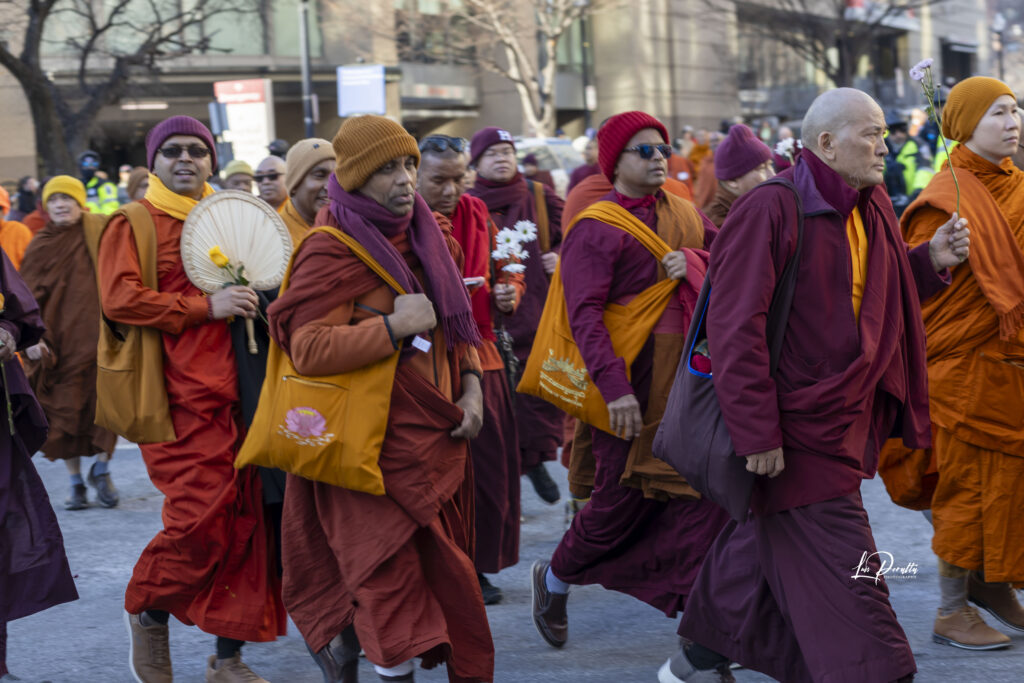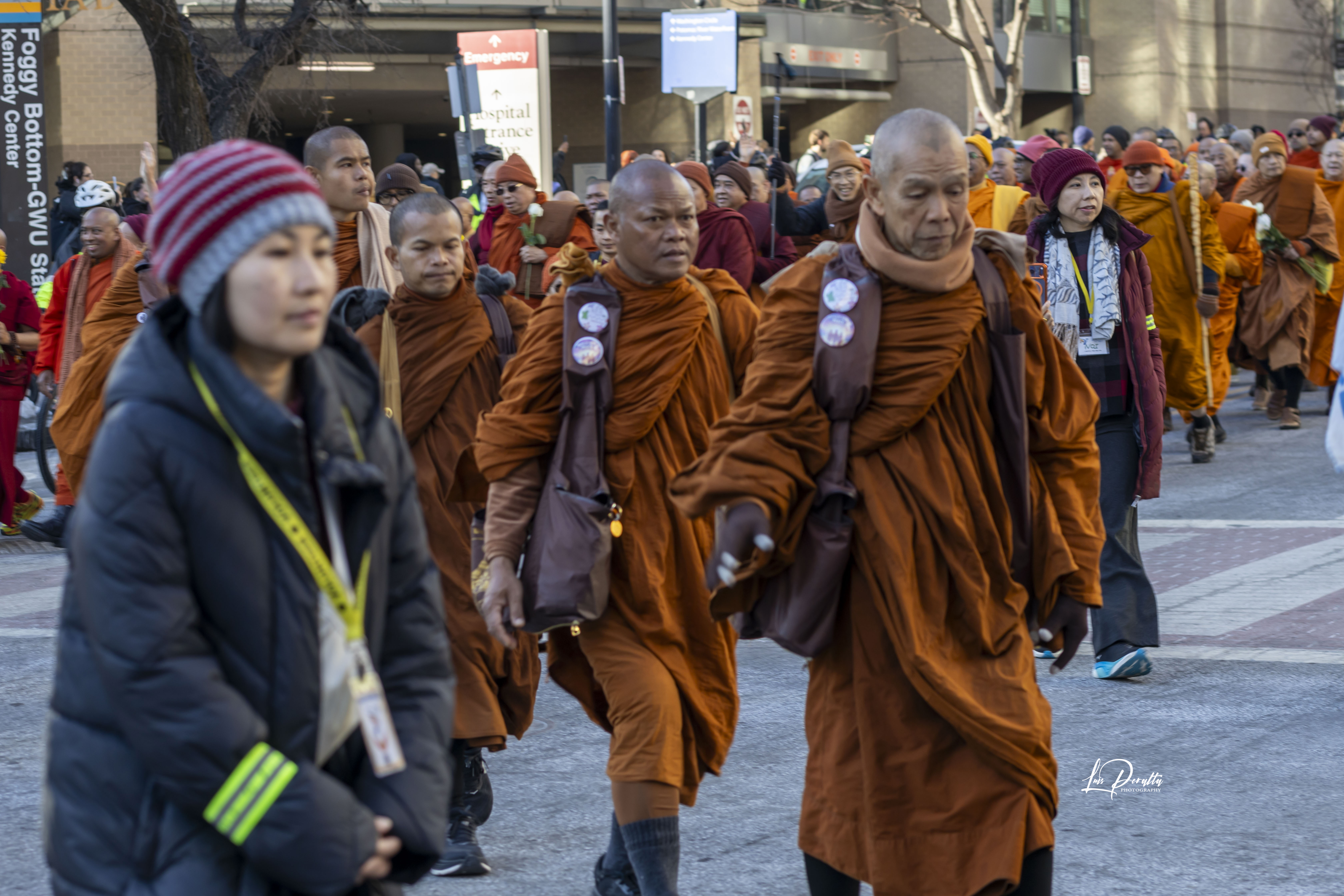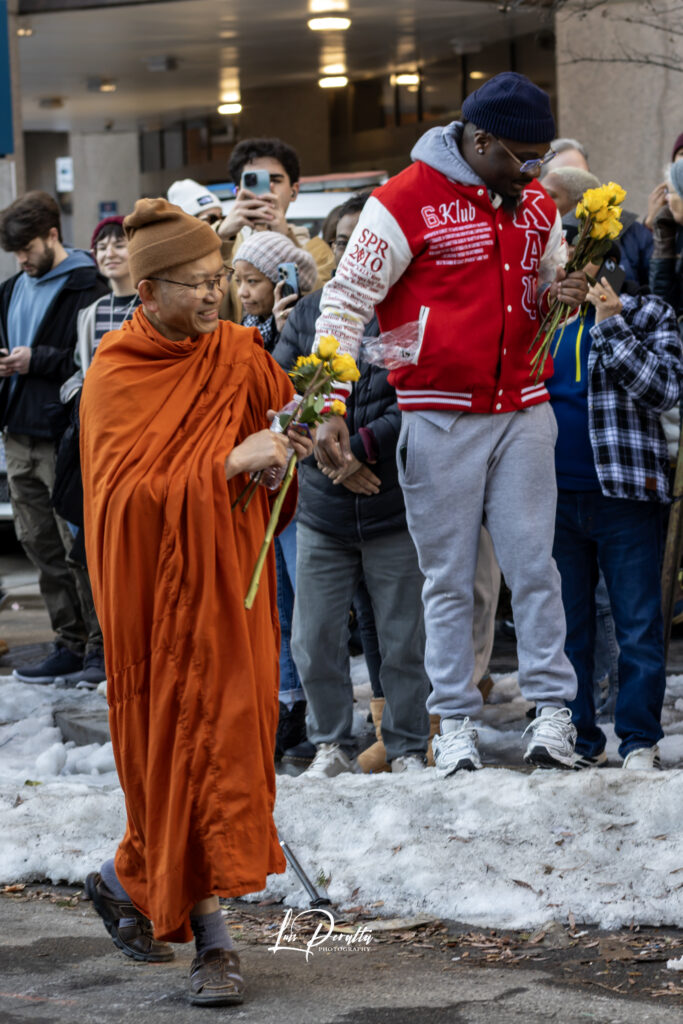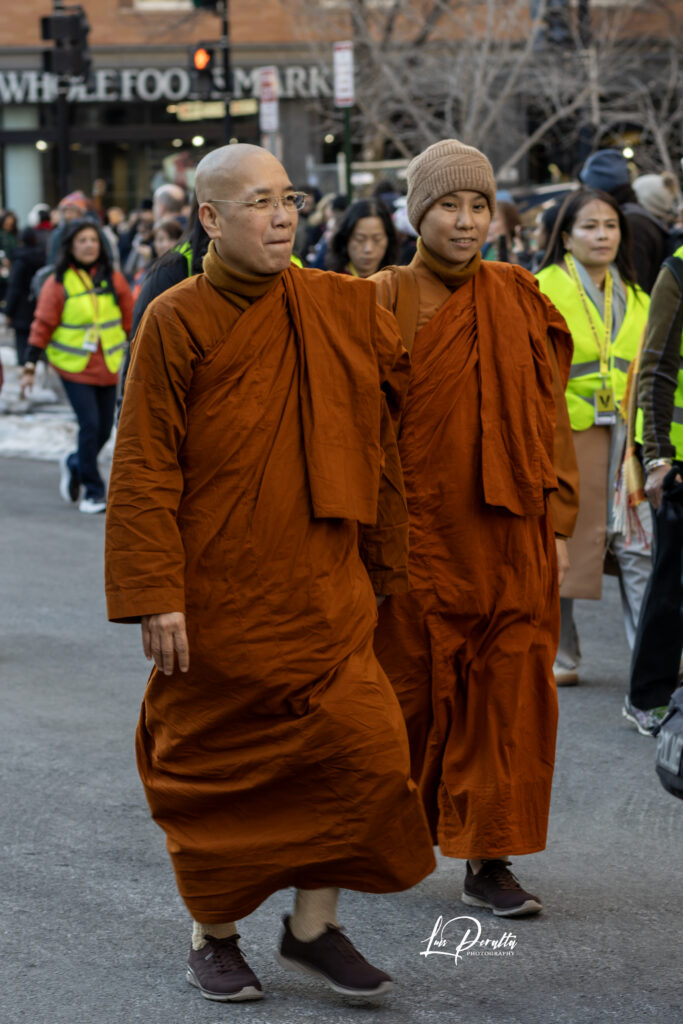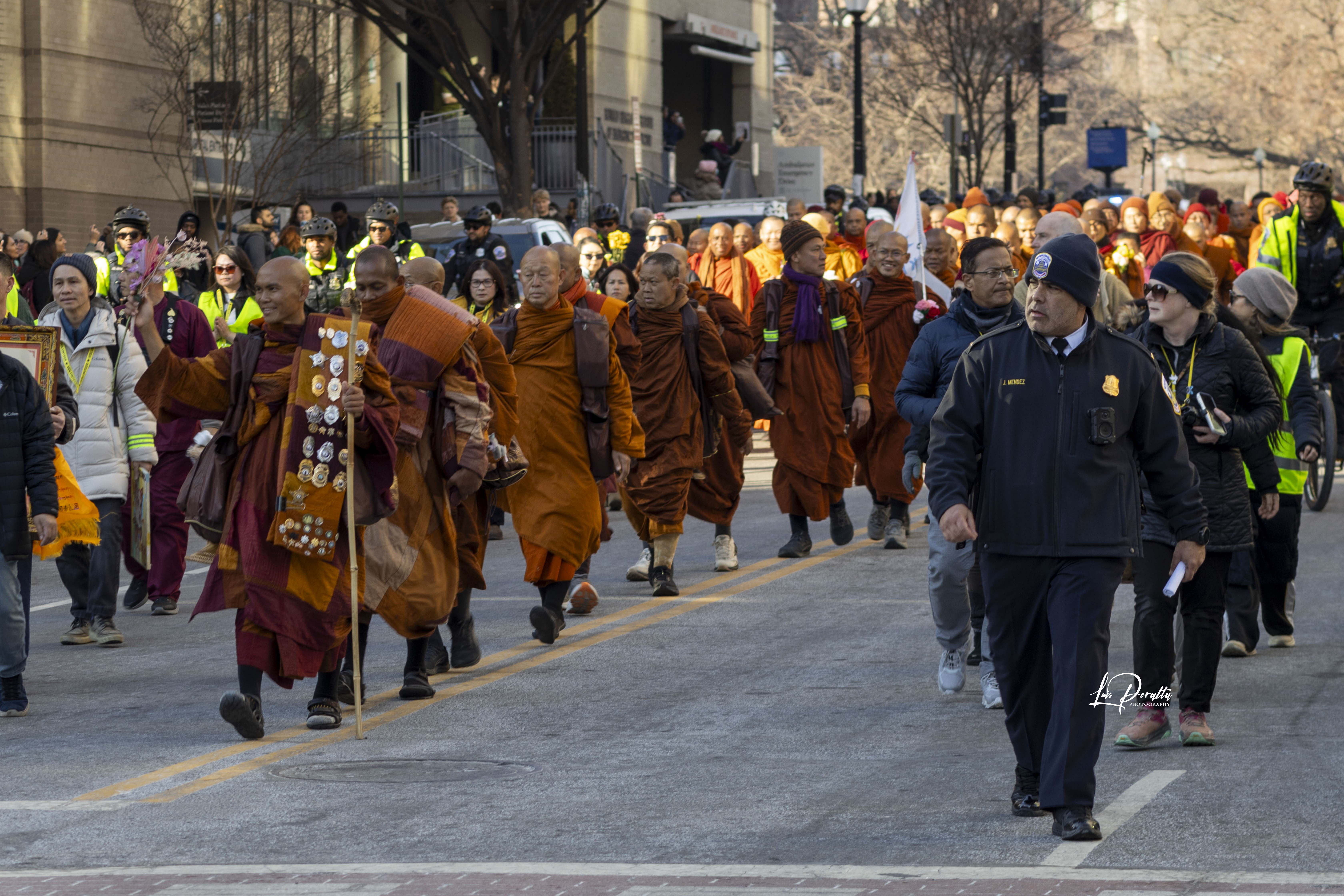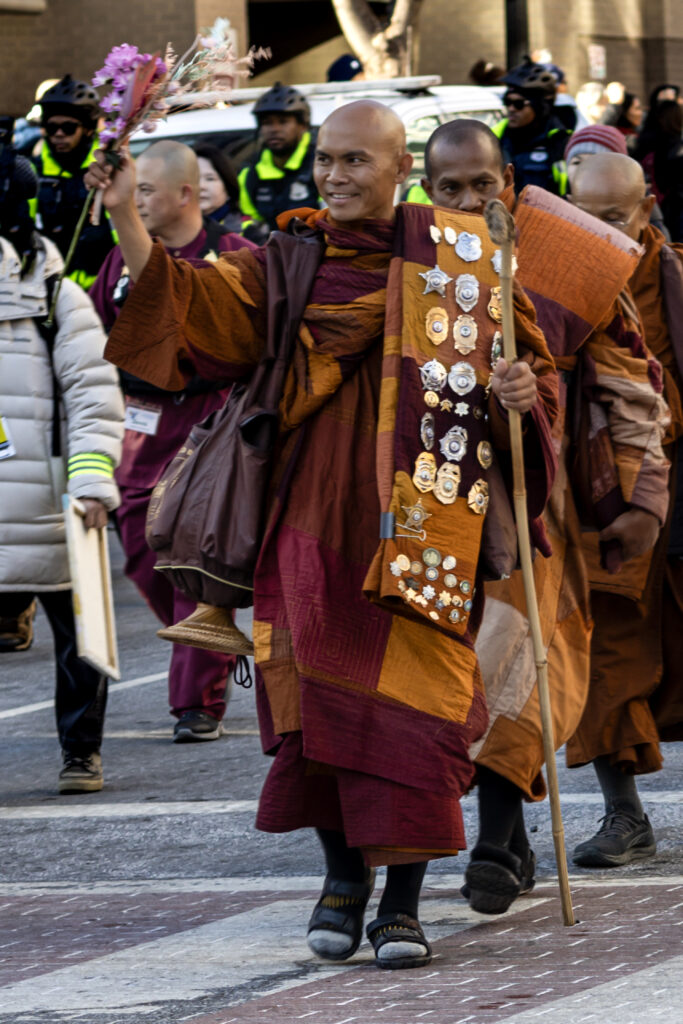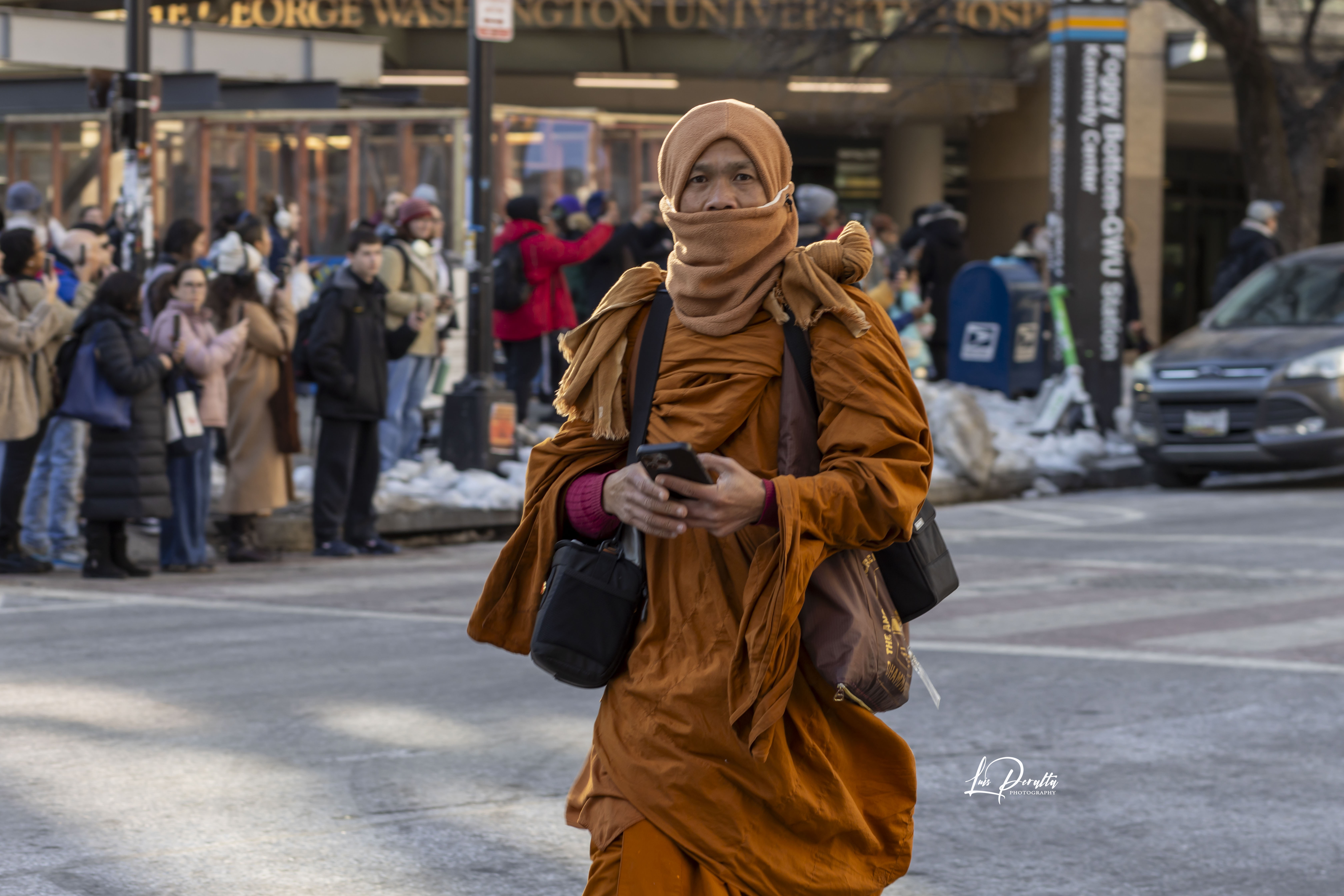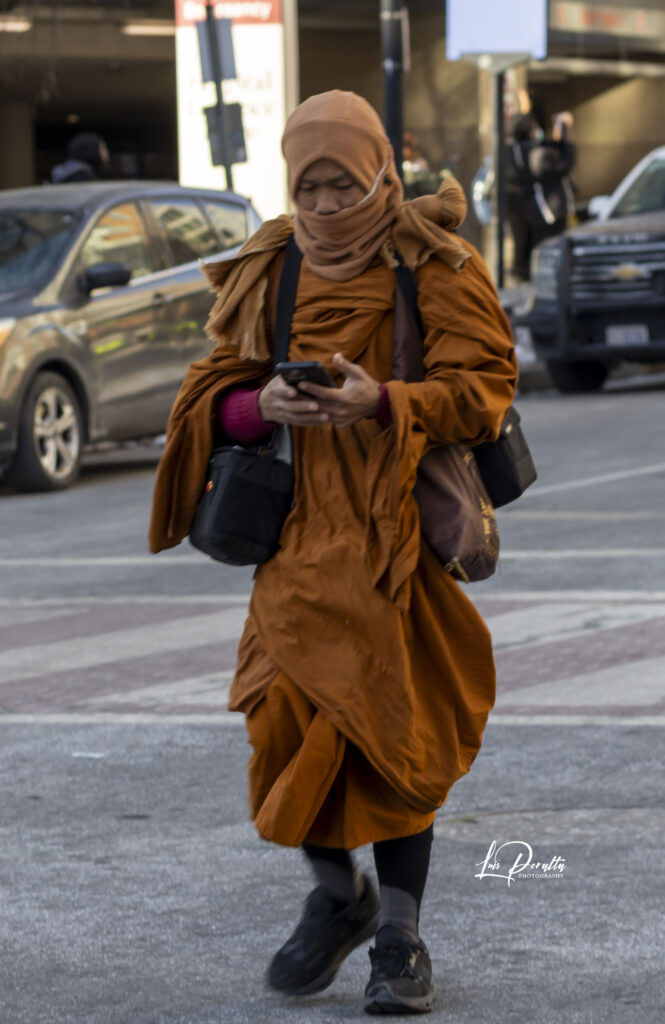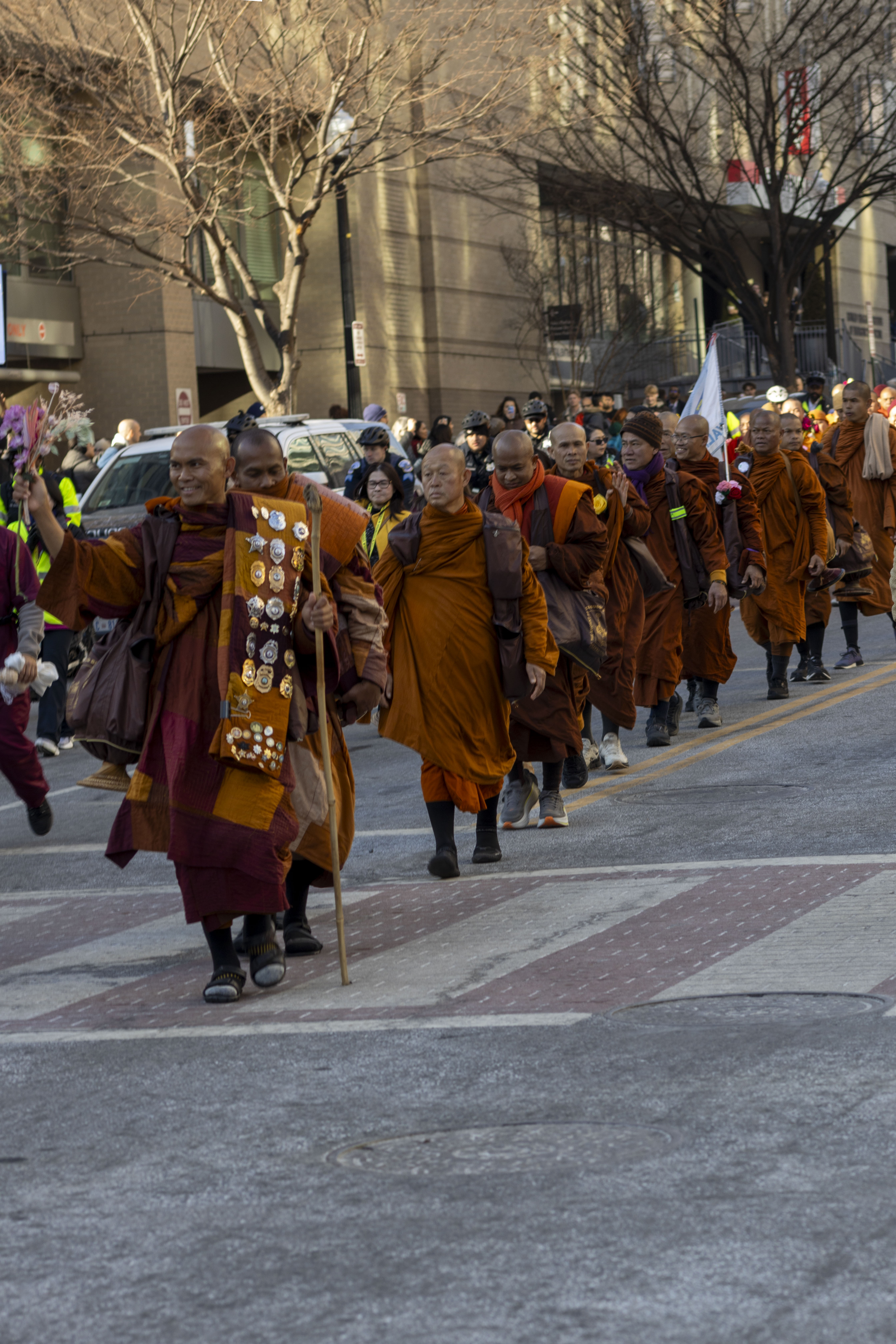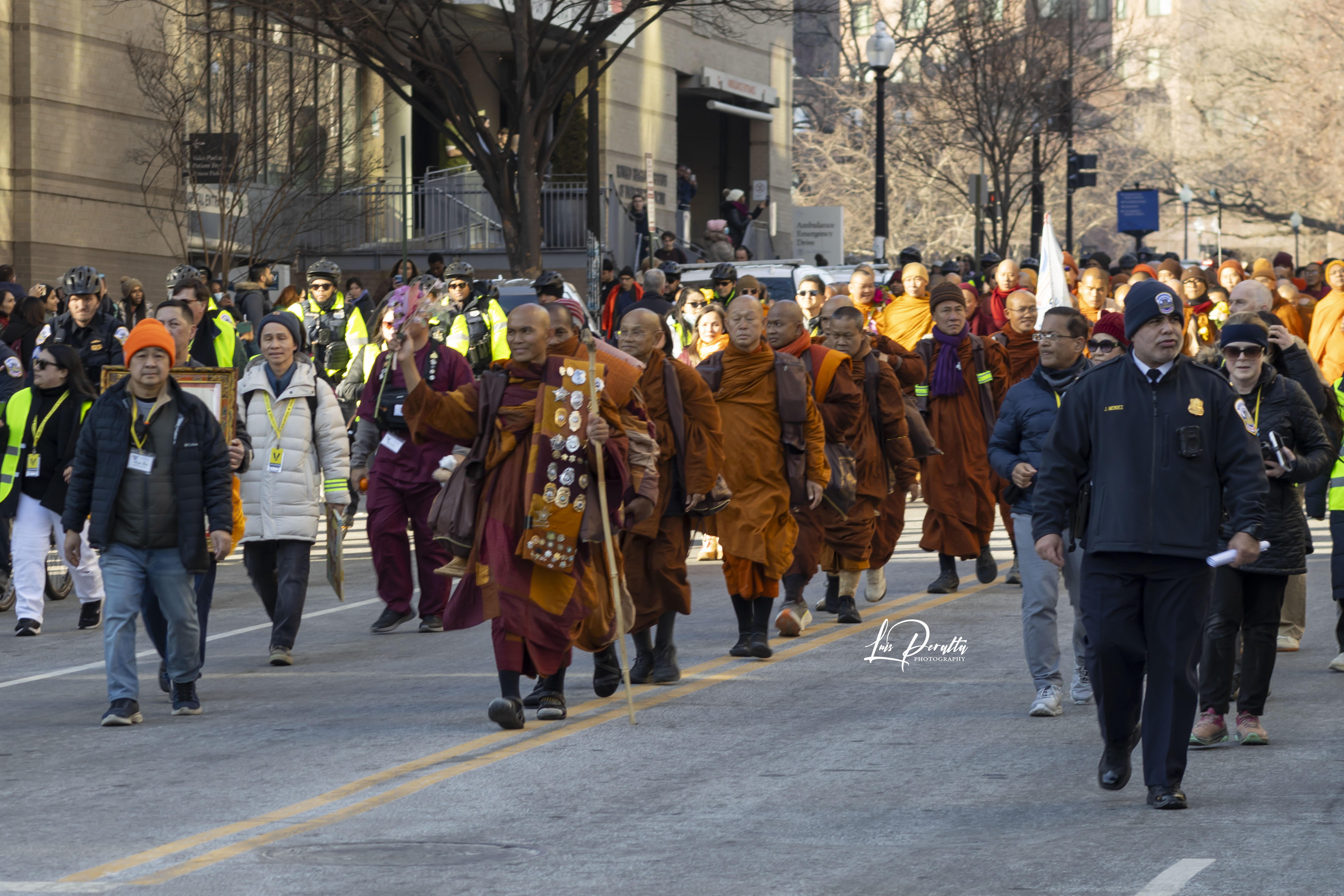


In a city often defined by the roar of political debate and the frantic pace of policy-making, a profound silence took hold this February. Wrapped in saffron robes and braving the lingering ice of a winter cold snap, a group of Buddhist monks completed an epic 2,300-mile “Walk for Peace,” arriving at the nation’s capital to a hero’s welcome that transcended partisan lines.
The journey, which began 108 days earlier in Fort Worth, Texas, concluded with a series of powerful ceremonies at American University, the Washington National Cathedral, and the Lincoln Memorial.
A Journey of “Conscientious Compassion”
The “Walk for Peace” was not a protest, nor was it a legislative lobby. Led by the Venerable Bhikkhu Pannakara, the monks described their trek as a “spiritual offering.”
- The Route: Spanning nine states, the monks walked through sun, snow, and rain.
- The Message: Promoting mindfulness, loving-kindness, and the cultivation of inner peace as a prerequisite for societal harmony.
- The Symbolism: The walk lasted exactly 108 days, a sacred number in Buddhist tradition representing spiritual completion and cosmic order.
“We do not walk alone. We walk together with every person whose heart has opened to peace, whose spirit has chosen kindness.” — Official statement from the Walk for Peace.
Hardship and Resilience
The pilgrimage was not without its perils. In November, tragedy struck outside Houston when an escort vehicle was hit by a truck, resulting in injuries to two monks. Most notably, Venerable Maha Dam Phommasan underwent a leg amputation. In a testament to the group’s resolve, Phommasan rejoined the monks in Washington, addressing the crowds from a wheelchair at the Lincoln Memorial.
Healing a Divided Capital
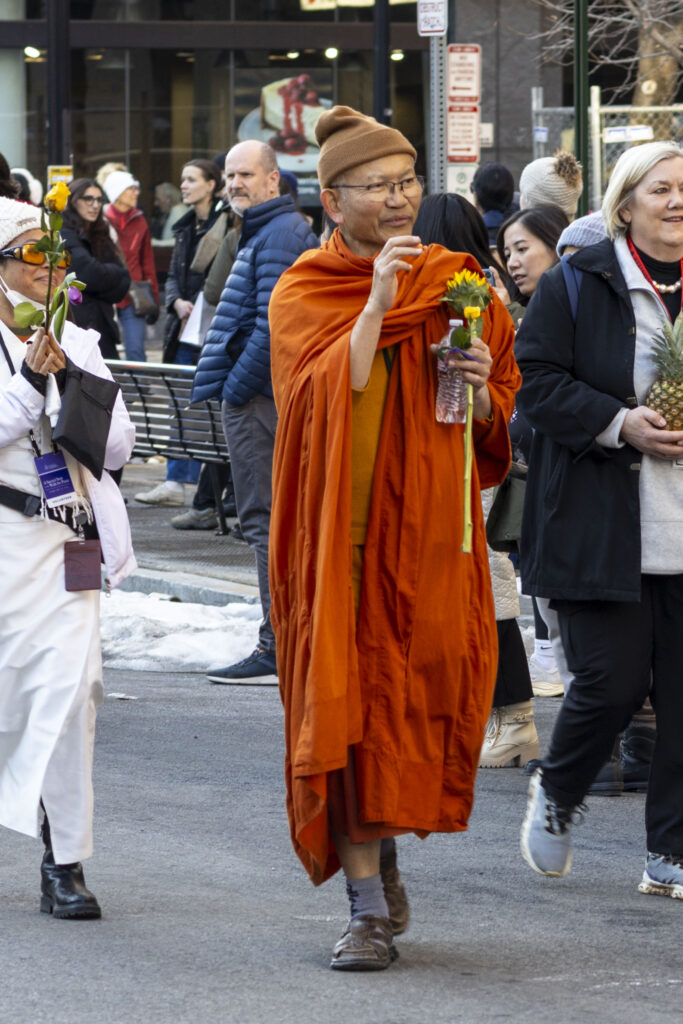
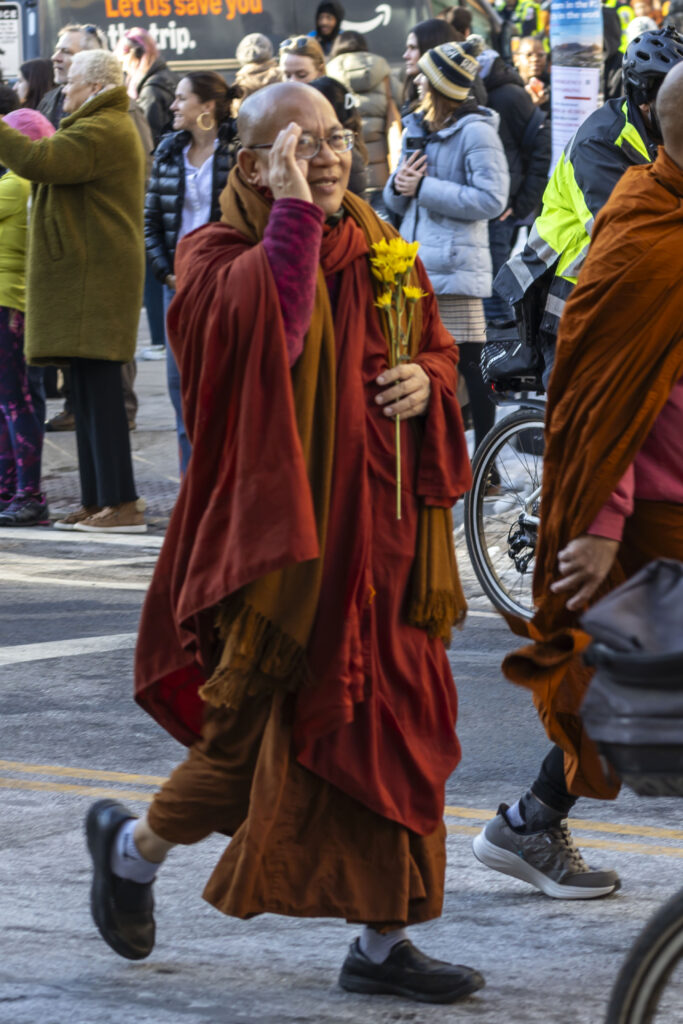
The arrival in D.C. saw thousands of residents lining the streets, many offering flowers or bowing in silence as the monks passed. At the Washington National Cathedral, an interfaith reception hosted by Episcopal Bishop Mariann Budde underscored the universal appeal of the monks’ mission.
Even the highest levels of Tibetan Buddhism acknowledged the feat; Tencho Gyatso, niece of the Dalai Lama, read a letter of tribute at the Lincoln Memorial, praising the monks for “sowing the seeds of greater peace” during a tumultuous era.